
 En
En  বাং
বাং  Ar
Ar Fr
Fr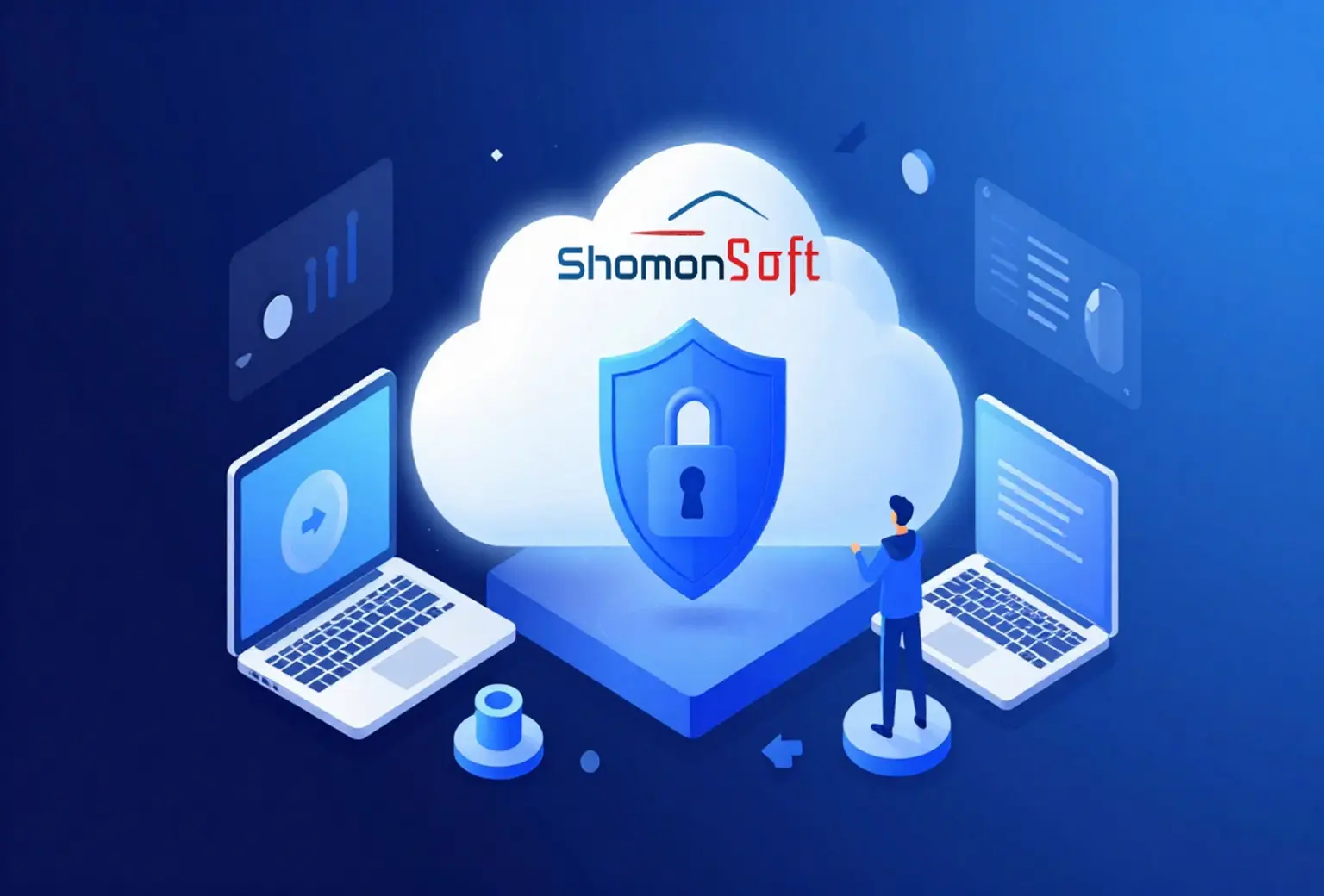
Cloud Security Best Practices for Businesses in 2026: Protect Data & Maximize Performance
Cloud computing has revolutionized the way businesses operate, offering scalability, cost-efficiency, and flexible access to resources. However, moving business operations to the cloud introduces new security risks. Cyberattacks, data breaches, and compliance violations are potential threats that require proactive strategies. Implementing best practices in cloud security is essential to protect sensitive business data, maintain customer trust, and ensure operational continuity. At ShomonSoft, we provide enterprise-grade cloud solutions that prioritize security, compliance, and performance.
1. Implement Strong Access Controls
Access control ensures that only authorized personnel can access sensitive data. Utilize multi-factor authentication (MFA), role-based access control (RBAC), and least-privilege principles. ShomonSoft integrates robust identity and access management systems to safeguard your cloud environment.
2. Encrypt Data at Rest and in Transit
Data encryption protects sensitive information both in storage and during transmission. Using AES-256 encryption for stored data and TLS/SSL protocols for data in transit minimizes the risk of unauthorized access. ShomonSoft ensures end-to-end encryption for all cloud deployments.
3. Regular Security Audits and Monitoring
Continuous monitoring of cloud environments helps detect suspicious activities early. Conduct regular audits, vulnerability scans, and penetration tests to identify potential weaknesses. ShomonSoft provides advanced cloud monitoring tools and expert security audits to keep your systems secure.
4. Backup and Disaster Recovery Planning
Unexpected incidents, such as ransomware attacks or system failures, can disrupt business operations. Maintain regular automated backups and develop a disaster recovery plan to restore operations quickly. ShomonSoft offers managed cloud backup solutions with disaster recovery integration to minimize downtime.
5. Maintain Compliance with Regulatory Standards
Depending on your industry, you may need to comply with standards such as GDPR, HIPAA, or ISO 27001. Implementing compliance-aware cloud architectures reduces legal risks and protects customer trust. ShomonSoft’s cloud services are fully compliant with global security standards.
6. Secure APIs and Third-Party Integrations
Many cloud applications rely on APIs and third-party integrations. Insecure APIs are common attack vectors. Implement strict API security policies, regular audits, and monitoring to protect data. ShomonSoft ensures secure integration of all third-party tools within your cloud ecosystem.
7. Continuous Employee Training
Human error remains a leading cause of cloud security incidents. Conduct regular cybersecurity training sessions for employees, focusing on phishing, password management, and secure cloud usage practices. ShomonSoft offers customized training programs for organizational staff.
8. Monitor Cloud Configuration and Compliance Drift
Misconfigurations are a major source of cloud vulnerabilities. Use automated tools to track configuration changes, enforce best practices, and prevent drift from compliance standards. ShomonSoft implements automated cloud governance solutions to maintain optimal security settings.
9. Implement Threat Detection and Response Systems
Modern businesses must proactively detect and respond to cyber threats. Deploy intrusion detection systems (IDS), security information and event management (SIEM), and real-time threat analytics. ShomonSoft integrates enterprise-grade threat detection and response mechanisms in your cloud infrastructure.
10. Adopt a Zero Trust Security Model
Zero Trust assumes that no user or device should be inherently trusted, even inside the corporate network. Enforce continuous verification, least-privilege access, and micro-segmentation to mitigate potential breaches. ShomonSoft’s cloud architecture incorporates Zero Trust principles for maximum security.
Conclusion
Securing your cloud infrastructure is not optional—it is a necessity in 2026 and beyond. By implementing these best practices, businesses can mitigate risks, ensure regulatory compliance, and safeguard critical data. ShomonSoft combines cloud hosting, SaaS solutions, custom web applications, and advanced cybersecurity strategies to deliver secure, scalable, and high-performance cloud solutions tailored to your business needs.
We are always ready to assist you. Please feel free to contact us for any support, consultation, or inquiries — our team is here to help you every step of the way.
FAQ
Q1: Why is cloud security important for businesses?
Cloud security protects sensitive data, ensures business continuity, and maintains customer trust. Without proper measures, businesses risk data breaches, financial loss, and reputational damage.
Q2: What is the role of encryption in cloud security?
Encryption protects data both at rest and in transit, preventing unauthorized access even if data is intercepted.
Q3: How does ShomonSoft ensure compliance in cloud deployments?
ShomonSoft aligns cloud architectures with global standards such as GDPR, HIPAA, and ISO 27001, providing fully compliant solutions for businesses of all sizes.
Q4: What is a Zero Trust model?
Zero Trust is a security approach where no user or device is trusted by default. Continuous verification, least-privilege access, and micro-segmentation are enforced to enhance security.
We are always ready to assist you. Please feel free to contact us for any support, consultation, or inquiries — our team is here to help you every step of the way.

