
 En
En  বাং
বাং  Ar
Ar Fr
Fr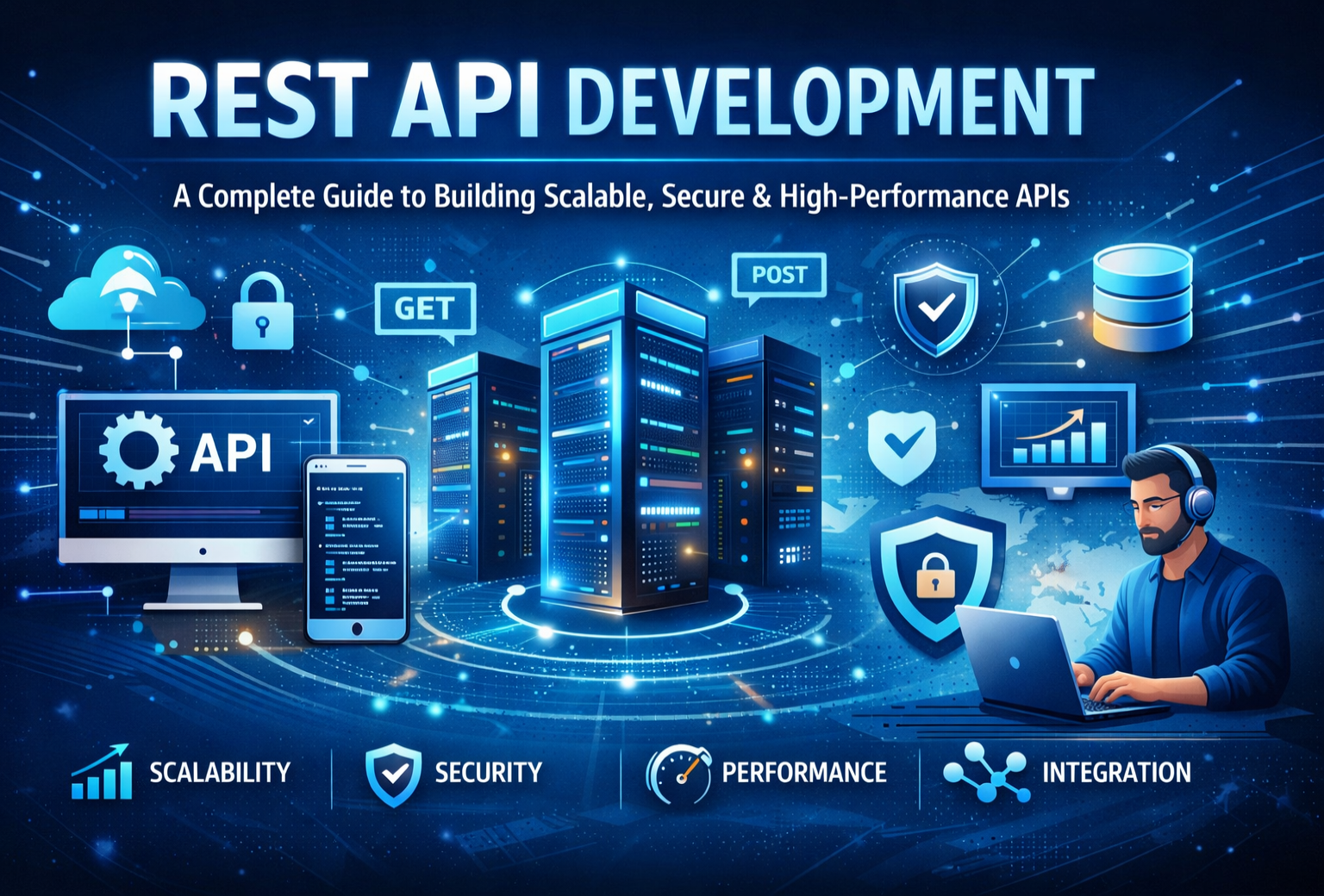
Advanced REST API Development Services
Power your applications with fast, secure, and scalable REST APIs
- BDT 20,000/ One Time
- Category : Web Application
- Use Limit : Unlimited Users
- Demo : Contact Us for Demo
- Mobile : +8801912095925

Advanced REST API Development Services for Scalable and Secure Digital Integration
In today’s modern digital ecosystem, seamless communication between applications, platforms, and systems is essential. Businesses rely on interconnected services to deliver smooth user experiences, automate processes, and scale operations efficiently. At the core of this interconnected environment lies REST API development.
REST (Representational State Transfer) APIs are the backbone of modern web and mobile applications. They allow different systems to communicate using standard HTTP protocols, enabling efficient data exchange across platforms. Whether it’s a mobile app fetching user data, a website integrating payment gateways, or enterprise systems communicating internally, REST APIs play a crucial role.
This comprehensive guide explores everything about REST API development — from fundamentals and architecture to best practices, security, scalability, and future trends. If you're aiming to build powerful, flexible, and high-performing APIs, this pillar content will guide you step by step.
What is REST API?
A REST API is a type of web service that follows REST architectural principles. It allows clients (such as browsers or mobile apps) to communicate with servers using standard HTTP methods.
REST APIs are stateless, meaning each request contains all the necessary information required for processing. This makes them highly scalable and efficient for distributed systems.
Core Principles of REST:
- Stateless communication
- Client-server architecture
- Uniform interface
- Cacheable responses
- Layered system design
Why REST API Development is Important
Modern applications are no longer standalone systems. They depend on multiple services, integrations, and platforms. REST APIs provide a standardized way to connect these components.
- Enable communication between frontend and backend
- Support mobile and web applications
- Integrate third-party services (payment, email, analytics)
- Facilitate microservices architecture
- Enhance scalability and flexibility
Key Benefits of REST API
1. Scalability
REST APIs are designed to handle large volumes of requests efficiently, making them ideal for growing applications.
2. Flexibility
They support multiple formats like JSON and XML, allowing integration across diverse platforms.
3. Performance
Lightweight data exchange ensures faster response times.
4. Security
REST APIs support authentication and encryption mechanisms.
5. Reusability
APIs can be reused across different applications, reducing development time.
Understanding REST API Architecture
REST APIs follow a client-server architecture where the client sends requests and the server processes and returns responses.
Each request includes:
- Endpoint (URL)
- HTTP method
- Headers
- Request body (if applicable)
The server responds with:
- Status code
- Response data
HTTP Methods in REST APIs
- GET: Retrieve data from server
- POST: Create new data
- PUT: Update existing data
- PATCH: Partially update data
- DELETE: Remove data
REST API Components
- Endpoints (URLs)
- Request methods
- Headers
- Status codes
- Payload (data)
Technologies Used in REST API Development
Backend Technologies
- Node.js (Express.js)
- PHP (Laravel)
Database Systems
- MySQL
- PostgreSQL
- MongoDB
Tools & Platforms
- Postman (API testing)
- Swagger/OpenAPI (documentation)
- Docker (containerization)
- Kubernetes (orchestration)
REST API Development Process
Step 1: Requirement Analysis
Define the purpose of the API, target users, and required functionalities.
Step 2: API Design
Design endpoints, request/response structure, and data models.
Step 3: Development
Implement backend logic, database integration, and API routes.
Step 4: Testing
Test endpoints for functionality, performance, and security.
Step 5: Documentation
Create clear API documentation for developers.
Step 6: Deployment
Deploy the API on cloud or server environments.
Step 7: Maintenance
Monitor performance, fix bugs, and update features.
REST API Security Best Practices
- Use HTTPS for secure communication
- Implement authentication (JWT, OAuth2)
- Apply role-based access control
- Validate all inputs
- Use rate limiting to prevent abuse
- Encrypt sensitive data
Performance Optimization Techniques
- Caching responses
- Using CDN
- Database query optimization
- Load balancing
- Compression (Gzip)
REST API vs GraphQL
While REST APIs use fixed endpoints, GraphQL allows clients to request specific data. Both have advantages, but REST remains widely used due to its simplicity and standardization.
REST API in Microservices Architecture
REST APIs are a core component of microservices, enabling independent services to communicate efficiently. Each service exposes APIs that interact with others, creating a modular and scalable system.
Common Challenges in REST API Development
- Handling large data volumes
- Maintaining backward compatibility
- Ensuring security
- Managing versioning
- Performance bottlenecks
Future Trends in API Development
- API-first development approach
- Serverless APIs
- AI-powered APIs
- Increased adoption of GraphQL
- Enhanced API security standards
Conclusion
REST API development is a fundamental part of modern software architecture. It enables seamless communication, scalability, and integration across platforms. By following best practices, leveraging modern technologies, and focusing on security and performance, businesses can build powerful APIs that support long-term growth and innovation.
Whether you are developing a mobile app, a SaaS platform, or an enterprise system, investing in high-quality REST API development ensures efficiency, flexibility, and success in today’s competitive digital landscape.
Frequently Asked Questions (FAQ)
1. What is REST API?
A REST API is a web service that allows communication between systems using HTTP methods.
2. Why are REST APIs important?
They enable integration, scalability, and communication between applications.
3. What is the difference between REST and SOAP?
REST is lightweight and flexible, while SOAP is more rigid and protocol-based.
4. Are REST APIs secure?
Yes, when implemented with HTTPS, authentication, and proper validation.
5. Which format is commonly used in REST APIs?
JSON is the most commonly used format due to its simplicity and efficiency.
We are always ready to assist you. Please feel free to contact us for any support, consultation, or inquiries — our team is here to help you every step of the way.
Choose Your Package Plans
Advanced REST API Development Services Price Plans
Yes, we specialize in custom software solutions including ERP, CRM, Inventory Management Systems, Online POS, Pharmacy Management Systems, and Co-operative Society Management Systems tailored to your business needs.
Yes, our SEO & SEM services help businesses rank higher on search engines, while our digital marketing strategies improve online visibility and drive targeted traffic.
Yes, we offer website and software maintenance, regular updates, and technical support to ensure your digital assets run smoothly.


